
Checklist: How to Spot Quality Handmade Accessories at a UK Craft Fair
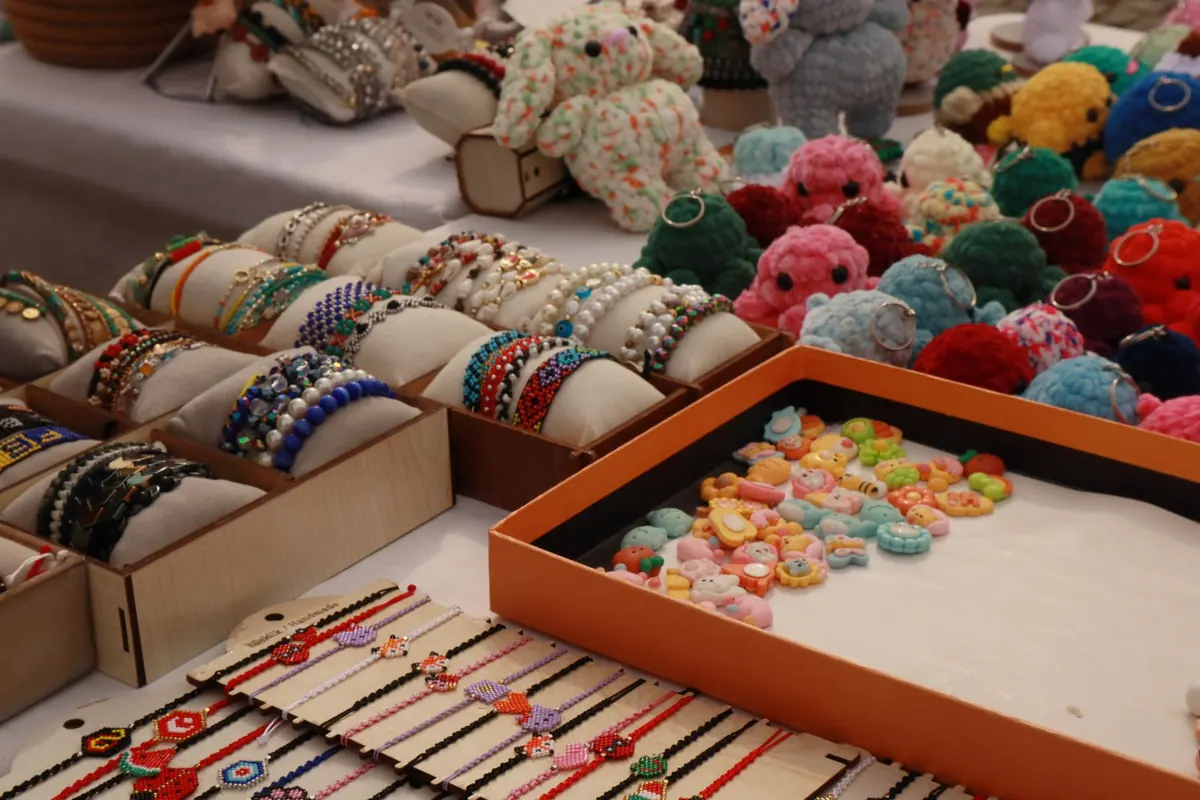
A craft fair is one of the few places left where you can buy an accessory and meet the person who made it. You can ask what the fibre actually is, feel the weight of a bag before you commit, and watch how a maker talks about their own work. That is a real advantage. It is also a distracted setting: warm lights, narrow aisles, a stallholder who has been on their feet since seven. Plenty of us have come home with something lovely that quietly fell apart by autumn. What follows is a sensible order in which to look at things, and what to look for at each stage.
Start with the maker, not the merchandise
Before you fall for a particular piece, work out who made it. A name on the stall, a business card, a care card tucked into a pocket, a notebook of commissions — all good signs. So is a maker who can tell you precisely which parts they made themselves.
"I cut and stitch the bags; I buy in the zips and the magnetic clasps" is a perfectly good answer, and a common one. Vague answers are what to note. If every item on a stall looks identical in every colour and size, with no name attached anywhere, it may still be handmade — just not necessarily by the person standing in front of you. Some stallholders sell imported charms or findings alongside their own work, which is fine as long as they say so when asked.
Turn it inside out and read the stitching
Stitching is the clearest evidence of care, and it is usually hidden. Ask to see the inside of a bag, the back of a brooch, the wrong side of a wallet. Nobody minds. A maker who has done the work properly will be pleased you looked.
What good stitching looks like
- Even tension and stitch length. Long, uneven machine stitches pull open under load; tiny, consistent ones hold.
- Backstitching at stress points. Handle joins, zip ends and strap anchors should be reinforced, not simply run off the edge.
- Flat seams. Puckering, ripples and twisted linings mean the pieces were not cut or pinned accurately.
- Finished raw edges. Inside a tote, look for overlocked, bound or French seams rather than fabric left to fray.
- Thread that suits the job. Matching thread is neat; a deliberate contrast colour is a design choice. Either is fine if it is consistent.
Hand-sewn work will never be machine-regular, and it is not meant to be. Judge consistency rather than perfection: does the rhythm stay the same across the whole piece, or does it fall apart at the last corner?
Find out what it is actually made from
Ask directly, and listen for a specific answer. "Wool" is less useful than "British wool backed with cotton lining". Fibre content matters because it decides how the item ages, how it washes and whether it will irritate sensitive skin.
Some words deserve a follow-up question. "Vegan leather" covers everything from cork and apple waste to a thin plastic coating on a fabric base. "Silver" might mean sterling, or it might mean plated, which will wear through at the high points with regular use. Ask whether it is sterling or plated, and whether there is a maker's mark or hallmark. With leather, ask if it is full-grain, split or bonded — the difference shows within months, not years.
Then use your hands. Good hardware — solid brass, stainless steel — has a bit of weight and moves smoothly. Zips should glide without catching. If a clasp feels tinny and bends when you press it, it will not survive a handbag.
Check the finishing — the details nobody photographs
Finishing is where time and money are saved, and where most craft-fair disappointment begins. Run through this list before you decide:
- Zips: smooth pull, tape sewn in straight, no puckering at the ends.
- Jump rings and clasps: soldered closed, or thick enough gauge that they will not pull open.
- Ear wires: sterling silver, gold-filled or surgical stainless steel if you have sensitive ears. Mystery metal is a gamble.
- Knots and thread ends: secured, trimmed and hidden, not left to work loose.
- Edges: burnished, painted, bound or sealed — whichever suits the material, but done deliberately.
- Snaps and magnets: set squarely, covered on the inside so they do not scratch a phone screen.
Handle it the way you will actually use it
A stall is not a mirror in daylight, so do what you can. Fasten and unfasten the clasp three times. Put your keys and phone in the bag, then lift it by one handle and watch whether the other attachment strains. Roll and unroll the scarf. Try the hat on properly rather than perching it. If the fair is indoors, step to a doorway or a window to check the colour in real light — marquee bulbs flatter everything.
Questions worth asking
- What is it made from, and how should I wash or store it?
- Which parts did you make, and which did you buy in?
- If a stitch comes loose or a clasp fails, can you repair it?
- Do you have a card or care sheet with your details on it?
- Is this a one-off, or will you be making more in other colours?
These are friendly questions, not an interrogation. Most makers would rather answer them than watch you guess.
Before you pay: a two-minute routine
Do one slow lap of the fair before committing to anything over a modest amount. If a piece is still on your mind when you come back, that is useful information. Then check the practical things: take a photo of the maker's card, ask about their policy on returns or exchanges, and confirm the care instructions rather than assuming them. If an item is a gift, ask for it to be wrapped and for a card to go with it — most makers will happily oblige.
Finally, trust the small doubts. A wobbly stitch, a smell of solvent, a colour that clashes with everything you own: none of these are reasons to talk yourself into a purchase. Buy the piece that made you stop walking, from the person who could tell you exactly how it was made. That is what you came for.
Photo: Büşra Demirci / Pexels